Manufacturing Operations Platform
Ongoing / development sandbox deployed · Product delivery & engineering
Manufacturing services / delivery operations
Turned ambiguous requirements into actionable delivery work and built the development foundations for browser-based QA of a manufacturing operations platform.
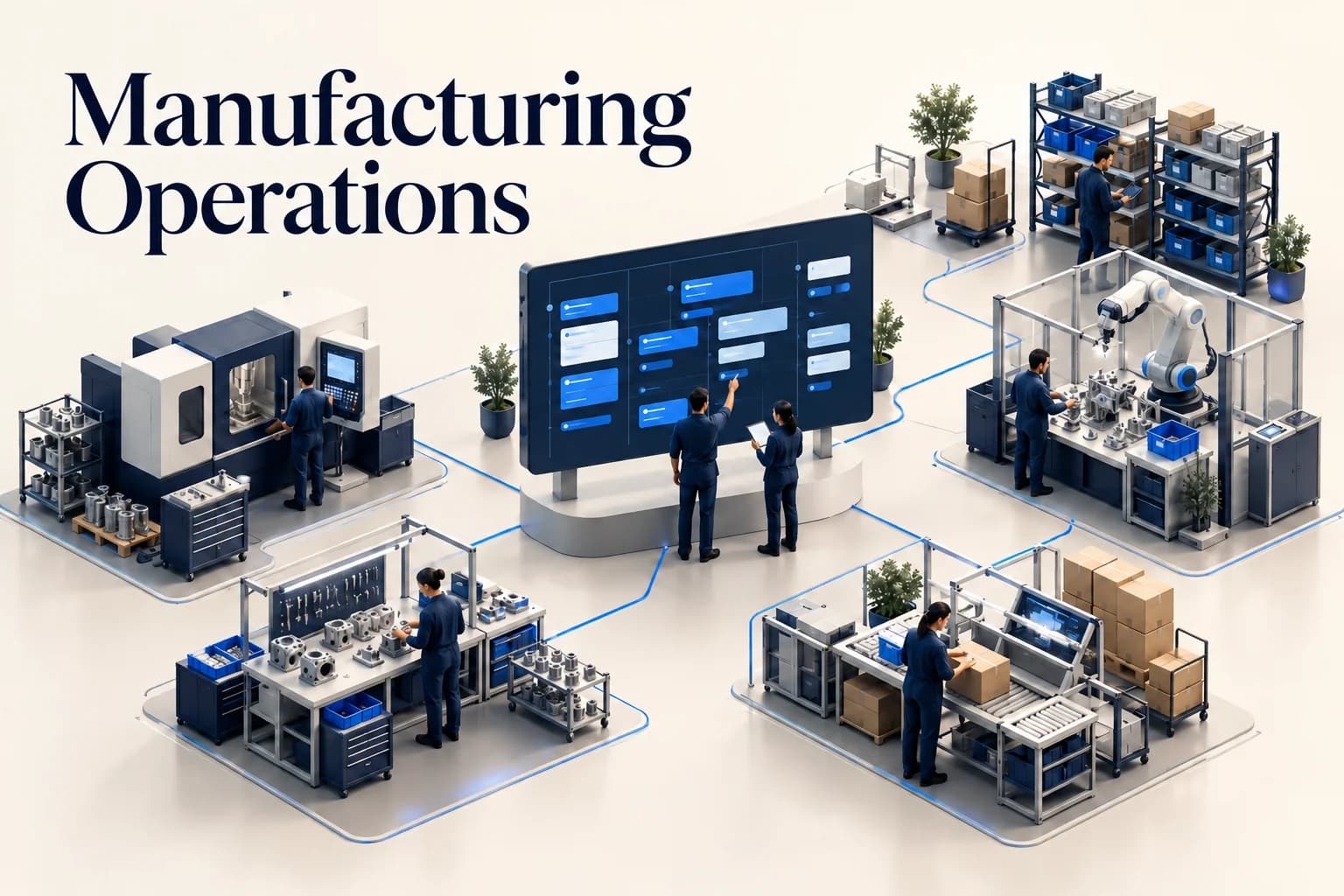
Concept illustration
The platform is a post-sale delivery hub for manufacturing advisory and services. It brings together engagements, delivery planning, expert calls and commercial workflows. I joined an existing product and engineering effort to clarify scope and move delivery forward.
Requirements crossed multiple workflows, with dependencies and shared foundations that affected scope and sequencing. The team also needed an isolated deployed environment where stakeholders could review the product without setting up the application locally.
Solution
- Clarified 37 assigned requirements
Reviewed full task descriptions and discussion history, then published clarifications for 37 assigned items in an 80-item requirement set. Made open questions, dependencies, duplicate scope and validation checks explicit.
- Separated discovery from implementation
Identified decisions that needed clarification before estimation or build. Distinguished shared foundations from individual features so sequencing reflected actual dependencies.
- Connected product scope to commercial workflows
Worked through requirements spanning engagements, delivery planning, expert calls, credits and milestone invoicing. Used the broader journey to identify where a local feature depended on another workflow or system.
- Established an isolated development sandbox
Implemented AWS deployment foundations and CI delivery for the existing application, including security checks, authentication configuration and Cognito admin invitations. Documented deployment and QA access for the team.
- Created a practical route to stakeholder validation
Delivered the initial development sandbox with deployment checks and post-deployment verification. Enabled invited reviewers to reach the application in a browser, with authenticated user acceptance remaining a next step.
Trade-offs I'd defend
Treated unresolved requirements as discovery work. This kept proposed estimates separate from delivery commitments and surfaced decisions before they became implementation assumptions.
Made the first deployment a controlled development environment with invited access. This created a place to validate the product while preserving a clear distinction between technical deployment and user acceptance.
Progress to date
Continue requirement resolution and authenticated user acceptance in the development sandbox, using review feedback to guide implementation. The engagement is ongoing; the sandbox deployment is a delivery milestone, not a claim of a completed production launch.
More case studies
Led discovery, product definition and engineering for an AI procurement platform, translating buyer and supplier needs into 39 feature specifications and evidence-linked bid evaluation.
Turned supply-chain rules into explainable allocation recommendations, built planner validation tools, and contributed AI-assisted process discovery.
Defined and delivered an ERP from scratch, from automated quotes to dispatch across nine industrial machines worth £2M+, and established the client's software department.
Improved the everyday agent experience and shaped a phased production architecture, connecting reliability, customer isolation and infrastructure spend to product needs.
Corporate + investor-relations website — CMS-driven, internationalized across 10 locales, with 3D/WebGL brand experiences.
A build you can't evaluate, a demo that has to ship, or a certificate a contract is waiting on.
Book a 30-minute discovery call. If we're not a fit, I'll tell you on the call — and point you toward someone who is.